
By Sheryl Lawrence
Every few decades, someone declares the book finished. Radio was supposed to kill it, then television, then the internet, then the e-reader. Now it is artificial intelligence’s turn, and this time the anxiety feels sharper, because the machine is not competing for our attention. It is competing for the job of writing.
The fear is understandable. A model can now produce a passable novel in an afternoon. Online stores are already crowded with machine-made travel guides, knock-off biographies and summaries that piggyback on real authors’ work. For an industry that runs on thin margins and long odds, a flood of near-free text looks like an existential threat.
But publishing has never really been in the business of producing words. Words were always the cheap part. What publishers sell is judgement: the decision that, out of ten thousand manuscripts, this one deserves a reader’s evenings. An editor’s real work is saying no, and then helping the rare yes become the best version of itself. AI makes words abundant. It does nothing to make judgement abundant. If anything, it makes judgement scarcer and more valuable.
That is the opportunity publishers should seize, and too many are missing it. The defensive instinct is to treat AI purely as a legal problem, a matter of licensing deals and lawsuits over training data. Those fights matter. Authors deserve consent and compensation when their work is used to build commercial products, and the industry is right to insist on it. But a strategy made only of litigation is a strategy of looking backwards.
The smarter move is to double down on what machines cannot fake: provenance and trust. Readers increasingly want to know who made what they are reading. A publisher’s imprint could become what a hallmark is to silver, a promise that a human wrote this, that a human editor fought over it, that facts were checked by someone accountable. In a sea of synthetic content, a credible label is a competitive advantage.
There is also no shame in using the tools. AI can transcribe interviews, catch continuity errors, draft metadata and help translate backlist titles into languages no one would have paid to translate before. A small press in Nairobi or Porto could reach readers it never could have afforded to. The danger lies not in using AI for drudgery, but in letting it quietly replace the creative and editorial choices that give a book its point of view.
Authors, meanwhile, face a harder squeeze. The midlist writer producing genre fiction on tight deadlines is most exposed to cheap imitation. Publishers owe those writers more than sympathy: clearer contracts on AI use, stronger marketing support, and a refusal to replace them with cheaper output when quarterly numbers get tight.
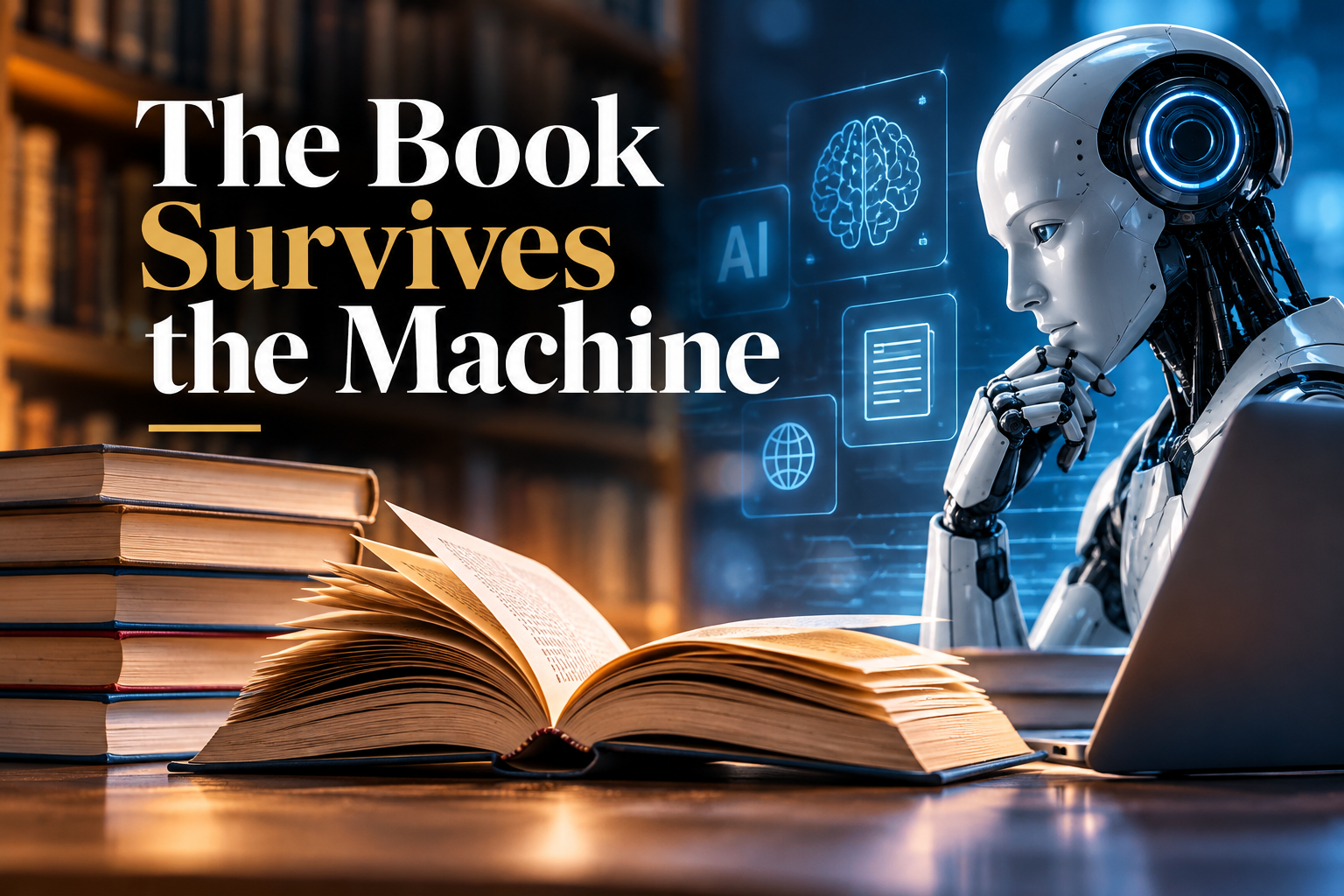
The book will survive this, as it survived everything else. The question is whether publishing survives as a filter people trust or dissolves into the noise. That depends less on what the machines can do than on what publishers decide they stand for.