

By Ian Shine I Senior Writer for Forum Stories
Most conversations about artificial intelligence and work start with loss: which roles will shrink, which tasks will vanish, who will be left behind. A World Economic Forum analysis asks the less common question. If AI destroys some jobs, which ones does it build?
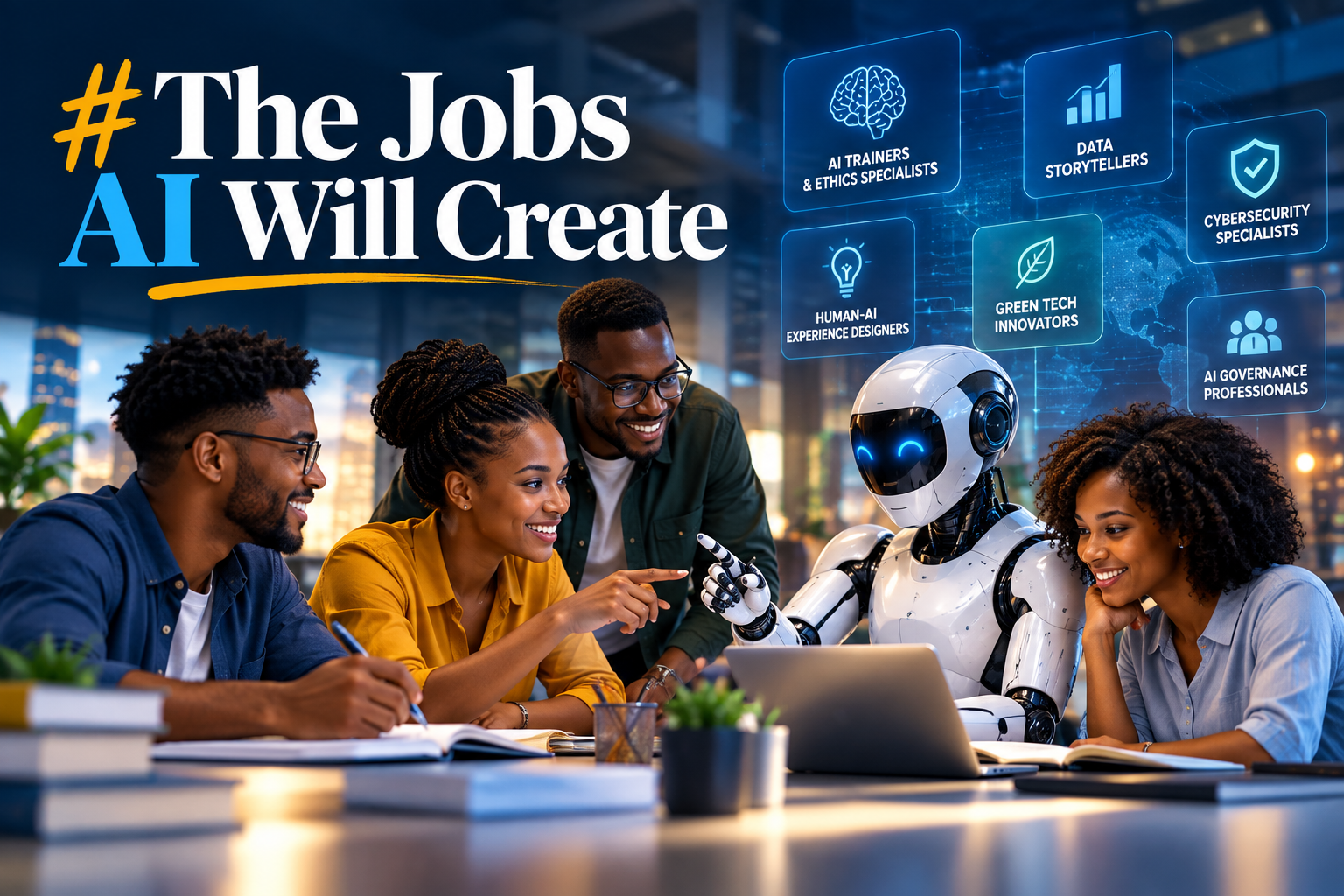
The answer rests on an old idea in economics. Joseph Schumpeter argued in 1942 that innovation constantly replaces old ways of working with new ones, a process he called creative destruction. Jobs disappear, but the same wave of change produces work that did not exist before. The Forum’s white paper on large language models applies that lens to generative AI and sorts the likely new work into three groups: trainers, explainers and sustainers.
The people who build it
Trainers are the builders. The obvious ones are the engineers and scientists developing language models, but the category reaches further. Models need specialised chips, so electrical engineers who design them could see rising demand. The servers those chips sit in need systems administrators. And because AI is hungry for electricity, power systems engineers may find themselves more sought after too.
The people who make it usable
Explainers stand between the technology and the public. The Forum compares them to user experience designers. Early personal computers demanded precise typed commands before they became friendly; many AI tools are still at that awkward stage. Explainers will design interfaces that accept text, voice and other inputs, and will tailor models for specific purposes, such as personal assistants, tutors and coaches.
The people who keep it on track
Sustainers make sure AI is used well, and the paper splits them into three types. Content creators write the prompts that steer a model towards useful output across any subject. Data curators guard the quality of the material models learn from, since poor training data produces poor results. Ethics and governance specialists test systems for bias and harm before release, a role that could grow into dedicated AI safety officers, ethicists and an entire field of AI law and regulation.
Beyond the new job titles
The Forum is careful to say no forecast is certain. Still, it expects AI and machine learning specialists to see the fastest growth over the following five years, at around 39%. It also sees gains for jobs built on human contact, with university and higher education teaching projected to grow about 10%, and healthcare likely to expand as well. Work that does not depend on language, including much manual labour, is expected to be largely insulated.
The paper’s conclusion is balanced: generative AI will displace some jobs, improve others and create many new ones. The burden, it argues, falls on business and government to prepare workers for the shift, so the benefits are widely shared. The Forum points to its Presidio Recommendations on Responsible Generative AI, a set of 30 proposals, as a starting point.
Three years on, some of these predictions already look familiar, while others remain open questions. The framework, though, still offers a useful corrective to the doom: the jobs AI creates will cluster around building it, explaining it and keeping it honest.
Republished summary. This piece summarises “We often hear that AI will take our jobs. But what jobs will it create?” by Ian Shine, originally published by the World Economic Forum on 18 September 2023. It draws on the Forum’s white paper Jobs of Tomorrow: Large Language Models and Jobs. The original article is the authoritative version.